

In the space of eight days last summer, Scotland changed two things that shape every respiratory isolation decision on its wards. On 27 July 2026 the Scottish Government published its first national infection prevention and control (IPC) strategy. On 3 August, the National Infection Prevention and Control Manual (NIPCM) stopped describing respiratory infections as “droplet” or “airborne” and dropped aerosol generating procedures from its guidance altogether.
Either change would be worth an IPC team’s attention on its own. Together, they reset the language and the logic of respiratory isolation in Scotland. This article walks through the strategy’s eight priorities, explains what changed in the manual, and looks at the practical isolation problems behind both, including where bedside and transfer isolation fit and where they don’t.
On this page
- What is Scotland’s IPC strategy?
- The eight priorities at a glance
- Why respiratory infection sits at the centre
- What changed in the NIPCM in August 2026
- Five isolation challenges behind the priorities
- Where ShareGuard99 and AeroPod fit, and where they don’t
- What happens next
- FAQs
What is Scotland’s IPC strategy?
Scotland’s IPC strategy is a ten-year plan to minimise preventable infection for everyone who accesses, uses or provides health and social care. Published by the Chief Nursing Officer Directorate on 27 July 2026, it sets out a vision and eight priority statements, with the detail to follow in multi-year action plans.
Its scope is wider than any previous Scottish policy on healthcare-associated infection (HCAI). The strategy covers NHS boards, Health and Social Care Partnerships, primary care, independent and third-sector providers, social care registered with the Care Inspectorate, prison healthcare and unpaid carers. The Cabinet Secretary’s foreword calls it the first strategy of its kind in Europe to span both health and social care.
It also brings in a new term. Where earlier policy talked about HCAI, the strategy talks about health and social care-associated infections (HSCAI): infections that develop from a health or social care intervention, or from exposure to other people or the environment in a care setting. Expect to see HSCAI in the action plans, in surveillance reports and, sooner or later, in tender documents.

The eight priorities at a glance
The eight priorities are deliberately broad. None of them names a technology or a room type, which is sensible for a ten-year document. Each one still has a practical consequence for how respiratory isolation is planned and delivered.
| Priority | What it commits to | What it means for respiratory isolation |
|---|---|---|
| 1. Political commitment, governance, leadership and policies | IPC as a national priority with risk-based investment; policies aligned with Healthcare Improvement Scotland standards and lessons from public inquiries | Isolation capacity becomes a governance question, not just an estates one |
| 2. Proactive national and local IPC programmes | WHO core components as a minimum, behavioural science, and stronger preparedness, operational readiness and response for outbreaks and pandemics | Surge isolation needs a plan before winter, not during it |
| 3. IPC integration and coordination | Links with AMR, quality improvement and public health; a risk-based, proportionate and context-specific approach | Matching the isolation measure to the risk, rather than one answer for every patient |
| 4. Education, training and career development | IPC education for non-specialists and a recognised pathway for specialists | Every isolation option needs staff who know when to use it and when not to |
| 5. Data for action | Better surveillance of IPC indicators and HSCAI, used for improvement as well as assurance | Isolation decisions worth recording consistently, so their effect can be measured |
| 6. Advocacy and communications | A compassionate, human rights-based and proportionate approach that listens to staff, patients and families | Isolation that protects others without cutting the patient off |
| 7. Research, development and innovation | Identify research gaps, review digital innovation, and fund collaborative, context-specific research | Real-world evaluation of newer isolation approaches in Scottish settings |
| 8. Collaboration and stakeholders’ support | A “Once for Scotland” approach, co-design and partnerships between nations | Shared approaches, rather than each board solving the same problem on its own |
Why respiratory infection sits at the centre
Respiratory infection isn’t singled out in the priorities, but it runs through the evidence behind them. The strategy cites a European study which found that pneumonia and bloodstream infections together account for more than 60% of the harm caused by the six most common infections in hospitals and long-term care facilities.
The trend matters as much as the total. According to the strategy, infection rates in Scotland have risen across hospital and community settings, with many now above past baselines. It links HSCAI-related bed days directly to longer waiting lists, and notes that the total burden of infection in care homes is not significantly different from that in hospitals. The Scottish Government puts the current toll at around 7,500 healthcare-associated infection incidents a year across NHS Scotland, at an estimated annual cost of £46.4 million.
Then there’s COVID-19. The strategy is frank that the pandemic exposed weaknesses in IPC across Scotland’s health and social care system. Its list of needs runs from improved surveillance and whole genome sequencing to specialist training, behavioural insights and optimal built environment design. That last one is the awkward one. Most of Scotland’s hospital estate wasn’t designed around negative pressure isolation at scale, and buildings don’t change on the timescale of a winter.

What changed in the NIPCM in August 2026
On 3 August 2026, updated transmission-based precautions (TBPs) guidance came into effect in the NIPCM and the Care Home Infection Prevention and Control Manual. The Care Inspectorate set out the headline changes for providers in advance: two transmission routes instead of three, no more references to aerosol generating procedures, and new respiratory categories.
For respiratory isolation, five changes stand out.
“Droplet” and “airborne” have become “air transmission”. The ARHAI Scotland literature review behind the update concluded that the old definitions aren’t sufficiently supported by evidence, because respiratory particles exist on a continuum of sizes and are found both close to and at a distance from the source. It’s the same direction of travel as the World Health Organization’s 2024 terminology, which introduced “infectious respiratory particles” and transmission “through the air”.
Aerosol generating procedures have gone. There’s no longer a finite list of procedures that trigger specific precautions, and post-AGP fallow times, some of which ran as long as 5.5 hours, are no longer required. Staff now assess whether care involves a high-risk exposure. Coughing, whether natural or procedurally induced, counts as a higher-risk exposure than most other respiratory activity, as does the use of high-speed devices on the respiratory tract in surgery, post-mortem and dentistry.
Proximity is now explicit. Respiratory exposure risk is considered greatest within one metre (about three feet) of a patient’s airway when delivering care.
R1, R2 and R3 categories drive placement and masks. Respiratory infectious agents are grouped by the hazard they pose, from R1 (unlikely to spread to the community, with effective treatment usually available) to R3 (likely to spread, usually with no effective prophylaxis or treatment). Under NIPCM Chapter 2, a patient with a suspected or confirmed R2 or R3 agent should go into a negative pressure isolation room where one is available, and staff caring for them wear respiratory protective equipment (RPE).
Ventilation adequacy is admitted to be undefined. The review accepts that it isn’t currently possible to define sufficient dilution of infectious particles for infection control purposes, so the old environmental risk assessment based on air changes has been removed. Rooms whose ventilation can’t dilute infectious particles are still treated as higher risk for exposure further from the patient.
If you’re writing an isolation SOP, a policy or a business case in Scotland, the vocabulary has moved on. “Airborne precautions” and “AGP” now date a document.
Five isolation challenges behind the priorities
1. When the negative pressure room is already occupied
NIPCM Chapter 2 is clear about the preferred placement for R2 and R3 agents, and equally clear about what to do when that room isn’t free. The patient goes into a single room, where appropriate, after a risk assessment, and when specialised ventilated isolation is indicated but unavailable, the manual says the next best option should be considered with an appropriate risk assessment. Placement is reviewed daily, with the IPC team advising on priorities when single rooms run short.
That’s preparedness in the sense Priority 2 means it: knowing before winter what “next best” looks like on each site, rather than working it out at 2am. We’ve covered how to stress-test that in our piece on respiratory infection control when the side room is already full.
2. Patients who can’t be cohorted
Cohorting is the usual fallback when single rooms run out, but the NIPCM rules out many of the patients who most need somewhere to go. Patients with different infectious agents shouldn’t share a cohort, nor should those still awaiting laboratory confirmation, more vulnerable patients, or anyone unlikely to comply with TBPs. A suspected case shouldn’t be cohorted with confirmed cases even when the same agent is suspected.
With several respiratory viruses circulating at once, that leaves plenty of patients in the “single room or nothing” category. Suspected tuberculosis is a familiar example, because precautions are needed long before culture results come back.
3. The moments between rooms
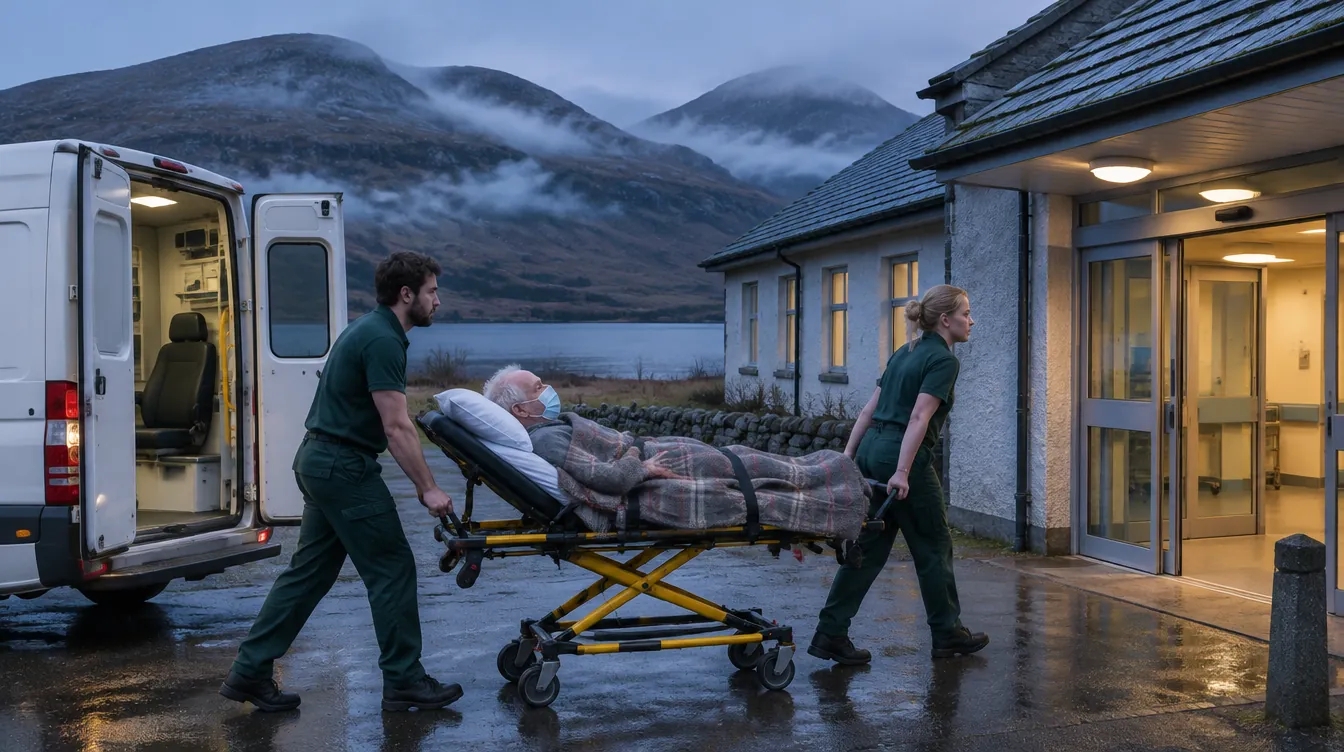
The NIPCM asks for transmission risk to be assessed before a patient moves to another care area, not just when they arrive. Infectious patients should only move between departments when it’s medically necessary. If they have an air-transmitted agent, they should wear a surgical mask during transfer if possible or tolerated, and the receiving department and transport staff must know the precautions in advance. When a patient in primary care needs to go to hospital, the ambulance service should be told about their infectious status.
“If possible or tolerated” is doing a lot of work in that sentence. A patient on oxygen therapy, or one who is confused or badly breathless, may not manage a mask. In Scotland, transfers can also be long: road journeys from rural areas and flights from island communities. The Scottish Government has said an Island Communities Impact Assessment will be published in full alongside the first action plan.
4. Proportionate isolation
Priority 3 asks for a risk-based, proportionate and context-specific approach, and the August update spells out what that means in practice. Alongside the transmission route, staff weigh the infectious agent, the environment, local outbreak data, other vulnerable patients nearby, the procedure, the patient’s symptoms and behaviour, and occupational health risk.
Proportionate cuts both ways. It means not reaching for a negative pressure room for every coughing patient, and it means not settling for an open bay when the risk calls for more.
5. The person in the bed
The strategy’s language on rights is stronger than most IPC policy. It says IPC in care homes must respect residents’ autonomy, relationships and quality of life, and Priority 6 calls for a compassionate, human rights-based approach. Isolation is one of the most restrictive things a care setting does to someone. Any isolation option, whether a side room, a cohort bay or a bedside device, deserves the same question: is this the least restrictive way to manage the risk, and what’s it like for the person inside it?
Where ShareGuard99 and AeroPod fit, and where they don’t
Neither device is mentioned in the strategy or the NIPCM, and we’d be wary of anyone claiming a product “complies with” either. What they can do is give clinical and IPC teams more options in the situations above.
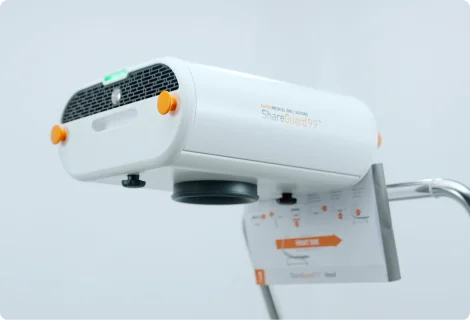
ShareGuard99® is a bedside isolation system. A frame fits an existing hospital bed between 510 mm and 900 mm wide, a single-use hood covers the patient’s upper body, and air from inside the hood is drawn through a HEPA-13 filter. Testing shows capture efficiency of over 99% and filtration efficiency of 99.95%, with up to about 2.7 Pa of negative pressure inside the hood when used correctly. It runs from a standard wall socket and needs no building work.
The most natural fit is as one of the options a team weighs when a negative pressure room is indicated but unavailable, or as source control at the bedside for a coughing patient in a single room with limited ventilation. The new guidance puts the space around the patient’s airway at the centre of exposure risk, and that’s the space ShareGuard99 is designed to work in.
The limits matter just as much. ShareGuard99 isn’t a negative pressure isolation room, and it shouldn’t be a reason to move a patient who needs one somewhere less suitable. It has no battery, so it doesn’t cover transfers. And any local SOP written around the old AGP list will need rewriting against the new high-risk exposure language, agreed with the IPC team before the device is used.
AeroPod covers the journey. AeroPod 01 is designed for short, lower-risk transfers within healthcare settings. The MHRA-registered AeroPod 10 and 15 are built for road ambulances, rotary-wing and fixed-wing aircraft, and AeroPod 15 provides a minimum of 15 air exchanges per hour, positive or negative pressure and passive filtration. For a patient who can’t tolerate a mask, or whose transfer from an island hospital takes hours, it offers a way to keep isolation going between pick-up and admission.
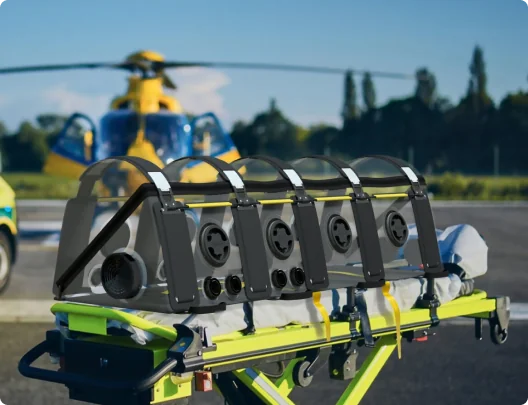
Used together, the two support respiratory isolation at different stages of the patient’s journey. We’ve compared the options in more detail in isolation rooms vs bedside isolation in UK hospitals.
What’s missing is Scottish evidence. Priority 7 calls for collaborative, context-specific IPC research in real care settings, and newer isolation approaches need exactly that.
What happens next
The next phase is the first multi-year action plan, covering three years and led by integrated action-planning groups from across health and social care. Initial impact assessments are due shortly after the strategy, and the Chief Nursing Officer has said the workforce’s experience and insight will be central to shaping the plans.
It’s worth watching from south of the border too. NHS England’s NIPCM was adapted from the Scottish manual with the aim of a consistent UK-wide approach to IPC. When we checked in November 2026, England’s version still used droplet, airborne and AGP terminology, so whether the August changes travel south is an open question. Language that starts in Scotland has a habit of turning up elsewhere.
FAQs
What does HSCAI mean?
HSCAI stands for health and social care-associated infection. Scotland’s IPC strategy uses it for infections that develop as a direct result of a health or social care intervention, or from exposure to other people or the environment in a care setting. It widens the older term HCAI, which was mostly associated with hospitals.
What are the R1, R2 and R3 respiratory categories?
They’re hazard categories added to the Scottish NIPCM in August 2026. R1 agents can cause disease but are unlikely to spread to the community. An R2 agent can cause severe disease and may spread, while those in R3 cause severe disease, are likely to spread and usually have no effective prophylaxis or treatment. The category guides patient placement and mask or RPE selection.
Are aerosol generating procedures still in Scottish guidance?
No. Since 3 August 2026 the Scottish NIPCM no longer refers to aerosol generating procedures, and post-AGP fallow times are no longer required. Staff instead assess whether care involves a high-risk exposure, such as coughing or the use of high-speed devices on the respiratory tract. England’s NIPCM is a separate document with its own guidance.
Does Scotland’s IPC strategy apply to care homes?
Yes. The strategy applies to every setting where health and social care is provided, including social care providers registered with the Care Inspectorate. The Scottish Government says it’s the first time it has published a dedicated IPC strategy covering care homes and social care, following lessons from COVID-19.
Talk to us about respiratory isolation in Scotland
CLS Surgical supplies ShareGuard99® and AeroPod to healthcare providers across the UK. If your team is reviewing isolation options against the updated NIPCM, or planning for winter, we can walk you through the test evidence, help you think through a local SOP with your IPC team, and support training. Call 0151 733 1900, email customerservice@cls-surgical.com or get in touch with the team.