TwinStream Evo
The next generation of ventilation
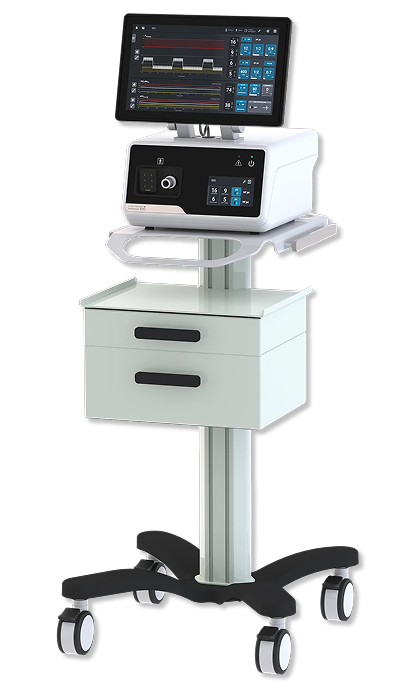
TwinStreamTM EVO is the newest addition to our range of jet ventilators and embodies more than 35 years of expertise in jet ventilation.
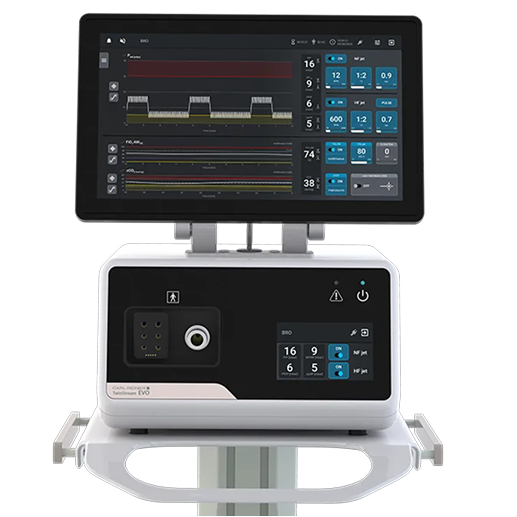
TwinStreamTM EVO is the newest addition to our range of jet ventilators and embodies more than 35 years of expertise in jet ventilation. Its modern design, user-friendly interface and 15.6″ touchscreen display make for a seamless integration into any hospital environment.
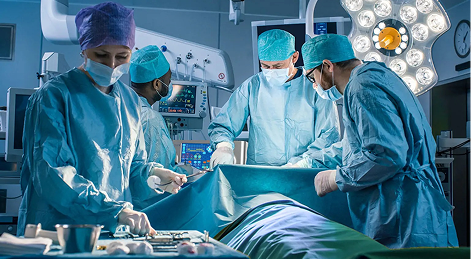
Just like its predecessor the TwinStreamTM EVO provides an unparalleled solution for procedures in a shared airway, when both surgeon and anaesthetist require access to the same upper airway (Laryngotracheal surgery) or lower airway (Interventional Pulmonology or Thoracic surgery).
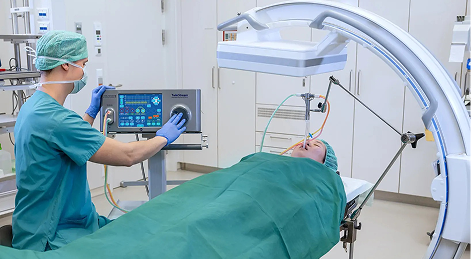
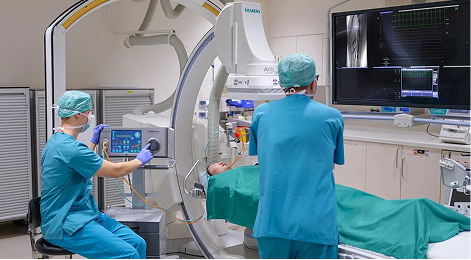
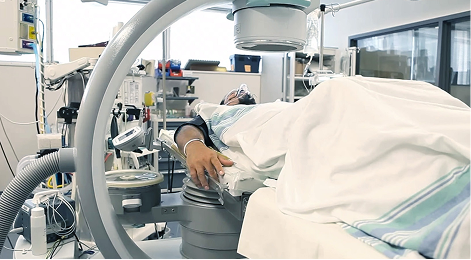
The TwinStreamTM EVO can also provide S-HFJVTM to conventionally intubated patients to immobilise the thorax and/or abdomen in Interventional Radiology, Interventional Cardiology or Interventional Urology. S-HFJVTM can reduce respiratory motion to a minimum, while assuring sufficient CO2 elimination, even during e.g. 5+ hour procedures.
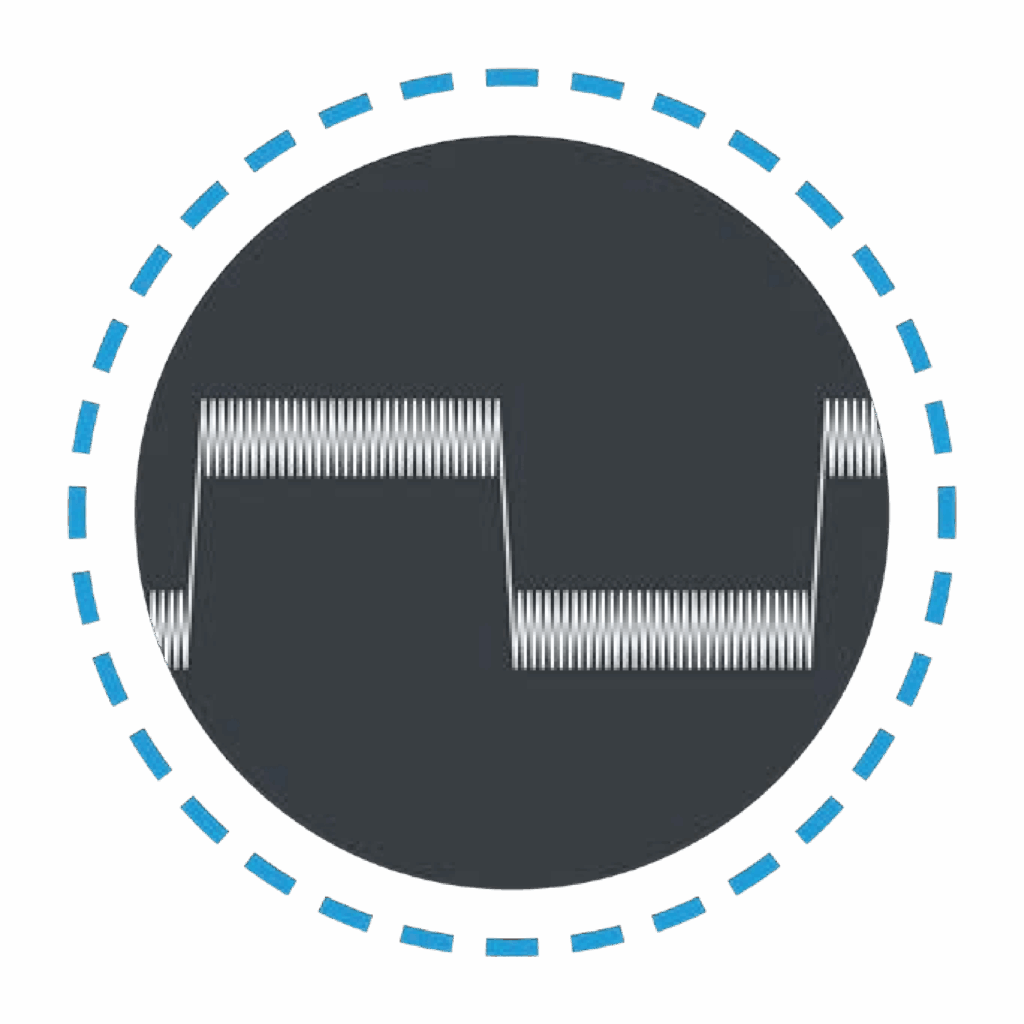
The unique combination of high-frequency (50-2000/min) and normal-frequency ventilation (1-120/min) provides both optimal oxygenation and efficient CO2 elimination at the same time. This is why Superimposed High-Frequency Jet Ventilation (S-HFJVTM) can be used without any time limit.
Keeping your TwinStream ready for every list is part of what we do. Our Service Department manages scheduled maintenance for you and is on hand if you need technical support between visits.
We carry out TwinStream servicing at your hospital, so the system does not need to leave site. Visits are planned to keep disruption to theatre operations to a minimum.
Servicing is completed by engineers certified by Carl Reiner, the manufacturer of TwinStream. You can be confident the work meets the required standards.
We track when your servicing is due, contact you ahead of time and arrange a visit that suits your schedule. You do not have to keep on top of it alone.
If an issue arises between annual maintenance visits, contact our team. We will respond quickly to help get your equipment back up and running as soon as possible.
We keep a record of when each TwinStream system is due for servicing.
We get in touch to let you know maintenance is coming up.
We book the visit at a time that suits you and your theatre schedule.
Carried out at your hospital by a certified Carl Reiner engineer.
We keep a record of when each TwinStream system is due for servicing.
We get in touch to let you know maintenance is coming up.
We book the visit at a time that suits you and your theatre schedule.
Carried out at your hospital by a certified Carl Reiner engineer.
Speak to our Service Department about maintenance, scheduling or technical support.
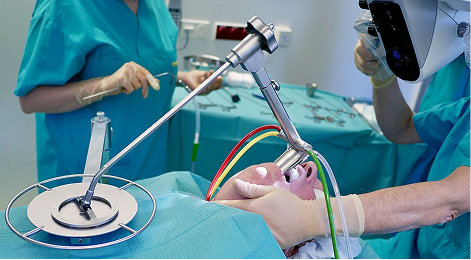
Infraglottic jet ventilation allows for laryngotracheal surgery (e.g. tumor resection, polyp removal, cyst removal, etc.) by means of a thin (laser-resistant) Jet Catheter, ranging from 1 to 4 lumens (OD 2.7 – 6.6 mm).
Tubeless supraglottic jet ventilation allows for optimal laryngotracheal surgery without endotracheal tube or Jet Catheter restricting the surgeon’s view and access. Even a challenging (sub)glottic stenosis can easily be treated supraglottically.
Laser Safe Mode (LSM) reduces the oxygen concentration in the airway down to the exact desired level to avoid any risk of airway fires.
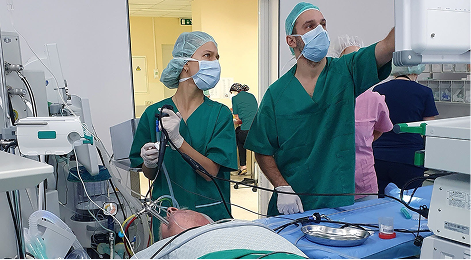
A jet bronchoscope or jet tracheobronchoscope comes with integrated channels for double jet ventilation, airway pressure monitoring and gas monitoring.
At the same time the ‘open’ jet endoscope provides optimal airway access for a wide array of shared airway procedures such as e.g.:
• restoring airway patency:
- laser surgery
- electrocautery
- cryotherapy
- argon plasma coagulation
- stent placement
• foreign bodies removal
• endobronchial ultrasound (EBUS)
• navigational bronchoscopy (CBCT)
• airway bleeding managment.
Several different types of Jet Catheters, ranging from 1 to 4 lumens, allow for shared airway procedures such as e.g. various resections (trachea, carina, pleura, lobe or lung).
A combination of Jet Converter and Jet Catheter allows switching from a wide endotracheal tube to a tiny Jet Catheter and back. During e.g. a tracheal resection this provides the surgeon with optimal working space when required.
During Single-Lung Ventilation the Jet Converter connects to a Double-Lumen Tube to gently ventilate the operated lung. HFJV provides optimal oxygenation, while its frequency range (up to 1500/min) reduces any lung motion to an absolute minimum.
During tumour ablation the exact targeting of the tumour is essential for the accuracy of the therapeutic effect, as well as to avoid collateral damage of healthy tissue.
High-Frequency Jet Ventilation (HFJV) can attain a frequency as high as 1500/min, effectively reducing the respiratory motion to virtually nothing.
Superimposed High-Frequency Jet Ventilation (S-HFJVTM) allows for optimal reduction of respiratory motion in the thoracoabdominal environment, while still guaranteeing optimal CO2 elimination, especially during longer procedures, which may take up to 4-5 hours.
During treatment of cardiac arrhythmia by means of radiofrequency ablation (RFA) the stability of the contact force between catheter tip and cardiac tissue is of crucial importance.
Compared to conventional ventilation High- Frequency Jet Ventilation (HFJV) is known to improve the stability of this contact significantly.
Superimposed High-Frequency Jet Ventilation (S-HFJVTM) allows for optimal reduction of respiratory motion in the thoracoabdominal environment, while still guaranteeing optimal CO2 elimination, especially during longer procedures, which may take up to 4-5 hours.
During kidney stone treatment by means of shock wave lithotripsy the accuracy of the stone targeting can be increased by means of High-Frequency Jet Ventilation.
High-Frequency Jet Ventilation (HFJV) can attain a frequency as high as 1500/min, effectively reducing the respiratory motion to virtually nothing.
Superimposed High-Frequency Jet Ventilation (S-HFJVTM) allows for optimal reduction of respiratory motion in the thoracoabdominal environment, while still guaranteeing optimal CO2 elimination, especially during longer procedures.
The next generation of ventilation
No FAQs available at the moment.
No scientific posters available at the moment.
No publications available at the moment.
We like to remain at the forefront of the industry and up-to-date with the latest innovations, developments, and training across our areas of care and the people we serve. So we regularly attend congresses, industry conferences, and other events. See where we will be next and come and meet the team so we can work together to empower patients.
We use cookies to run this website, analyse how it's used, and for ads personalization. With your consent, we and our partners, including Google, use cookies and mobile ad identifiers for personalised and non-personalised advertising and to measure ad performance. You can accept, reject or change your choices at any time. Learn how Google uses your data.