

Origin Medical Devices
A breakdown of the panther ventilators
The Panther line of non-invasive and invasive ventilators supports any patient from neonate through adult, making the clinician’s life easier by enabling multiple therapies in one solution
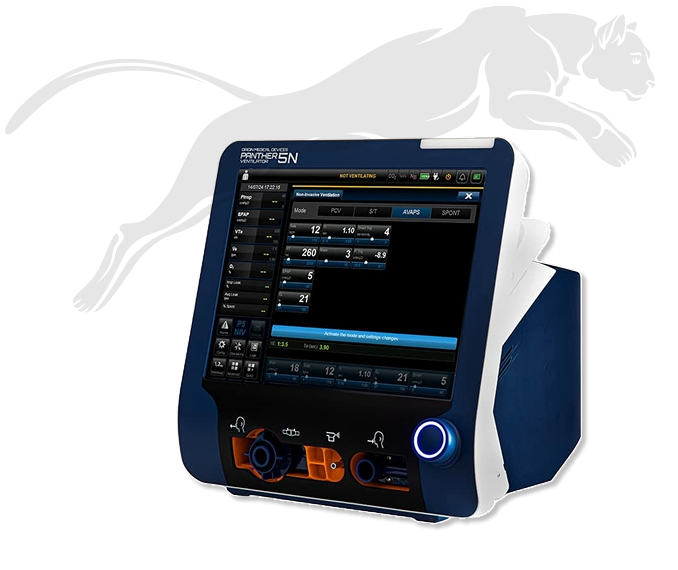
The Panther line of non-invasive and invasive ventilators supports any patient from neonate through adult, making the clinician’s life easier by enabling multiple therapies in one solution. Combining a state-of-the-art blower with a patented proportional flow valve and specialized algorithms, Panther Ventilators deliver higher pressure, more flow, and precise breaths to the patient.
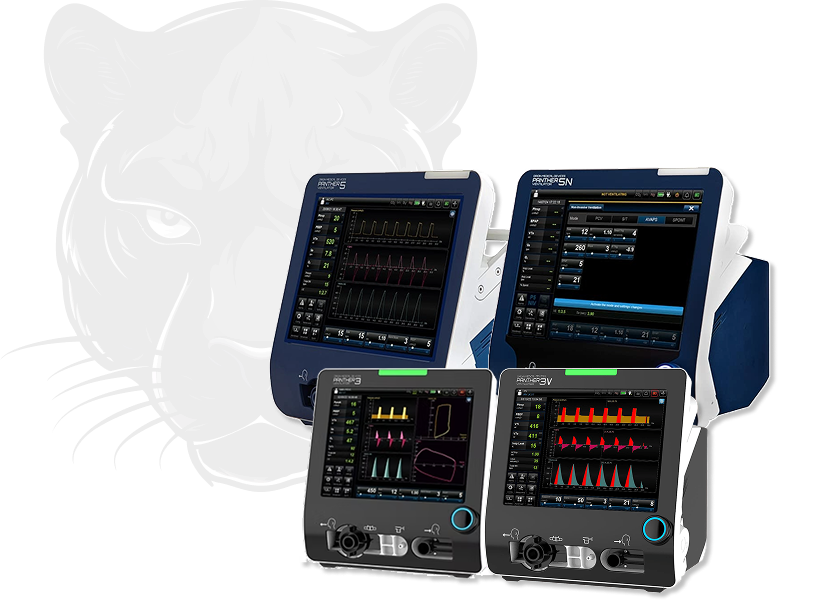
A breakdown of the panther ventilators
No FAQs available at the moment.
No scientific posters available at the moment.
No publications available at the moment.
We like to remain at the forefront of the industry and up-to-date with the latest innovations, developments, and training across our areas of care and the people we serve. So we regularly attend congresses, industry conferences, and other events. See where we will be next and come and meet the team so we can work together to empower patients.
By combining a state-of-the-art blower with our patented proportional flow valve, the Panther ventilators deliver better pressurization rates at higher pressures and flows and provides high precision breath delivery to the patient. With performance as good or better than any dual compressed gas source ventilator, the ventilator can support the sickest neonatal through adult patients.
The difference is the proportional valve interface with a high-powered blower. This patented system enables pressurization up to 100 cmH2O with quicker response times and adaptation to patient demand providing optimal support of the patient’s condition and needs.
The structure also allows for very high bias flows required in specific non-invasive settings or when using helmets. The ability to quickly and easily adjust to these requirements combined with advanced leak analysis algorithms provides the highest support level for non-invasive patients
The Panther line of Ventilators was designed from the beginning to make the clinician’s life easier and lower the cost burden of critical care by combining multiple therapies into one device solution (Invasive, Non-Invasive and high flow O2 therapy)
This eliminates the need for three separate devices that take up space and resources. This platform is the new gold standard for performance and synchrony as a next generation multi-functional device.
The ventilator can be configured to compensate for volume delivery when a leak exists. The ventilator will deliver a higher volume which corrects for the leak ensuring the correct volume will be delivered to the patient.
The Panther ventilators eliminate the need for a standalone NIV devices. Their superior leak compensation, leak adaptive triggering, and compatibility with traditional NIV interfaces, result in the gold standard NIV capability. The proprietary triggering algorithm improves patient synchrony even in the presence of variable or high flow leaks.
High flow O2 therapy is offered through the Panther ventilators with up up to 80 L/min of flow, negating the need for a standalone high flow O2 therapy device.
This combination of functionality helps streamline clinician workflow and is less disruptive to patient management.
The Panther ventilators are highly mobile, with no requirement for compressed air or a step down unit commonly used for patient intrahospital support.
A powerful dual-staged blower combined with our patented proportional flow valve enables total independence from compressed air without compromising performance or patient care.
This makes the Panther ventilators ideal for hospitals that do not have a compressed air infrastructure and for facilities modified for care of pandemic patients such as COVID-19.
The rest of the global ventilation market is divided between compressed air/O2 ventilators which are known to provide high performance, and blower-based ventilators that provide mid to low end performance. This results in patient care limitations in facilities which lack the infrastructure or the resources to purchase traditional dual compressed gas source ventilators.
The Panther line of ventilators provides the best of both worlds – independence from compressed air infrastructures with performance equal to or better than compressed air/O2 ventilators.
With a 3+ hour battery, 11Kg weight, internal blower air source, low flow O2 inlet, easy mount cart and a small footprint, the Panther 5 is highly mobile providing the highest level of care.
With the Panther line of ventilators there is no need for a separate device for intrahospital transport.
There are clinical and risk reducing benefits to keeping patients on one respiratory support device for the entire duration of their therapy. Patients tend to suffer various clinical setbacks when they are switched to and from less capable devices.
Additionally, there are many operational benefits such as not having to purchase, maintain and operate multiple devices, as well as having all the patients’ logs on one device.
The freedom of movement gives the clinician an easier device to manage and enables early patient mobility. Getting patients out of bed (early patient mobilization) has been shown to decrease time on the ventilator, decrease hospital length of stay, and improve functional outcomes.
Performance and Features
The Panther ventilators are designed with the objective of providing highest performance non-invasive support that enables it to be used with any patient interface from traditional vented (intentional leak) and non-vented (no leak) masks to nasal prongs.
The Panther platform quickly adapts to leaks and incorporates a highly leak tolerant SMART Trigger both of which deliver exceptional NIV support and minimizes the time required for the transition to patient comfort.
As with all NIV therapy, patient comfort, patient synchrony and the ability to adapt quickly to leaks are the benchmarks to minimize NIV failure.
The proprietary novel SMART trigger detects patient effort independent of absolute flow or pressure providing improved synchrony and trigger response in high and unstable leak conditions. The ventilator quickly analyzes and adjusts to compensate for leaks, minimizing the need to adjust trigger and expiratory cycle settings to provide optimal support
Volume Compensation
The Panther ventilators provide the ability to activate volume compensation for volume breaths. When the feature is activated, the ventilator will safely provide more volume at the outlet carefully analyzing the leaks and the overall leak volume, guaranteeing that the patient received the set volume.
Measurements of inspiratory Vleak, leak %, average leak (lpm) and (%) and leak alarms provide the clinician with a full information to correctly adjust the mask if needed
Circuits and regulatory compliance
In addition, being able to use dual limb circuits as well as vented masks, reduces CO2 rebreathing, reduces expiratory resistance, and allows for a seamless transition between invasive and non-invasive ventilation on the same device and delivers true non-invasive ventilation excellence while providing all the advantages of an ICU ventilator for monitoring a multitude of parameters including SpO2 and CO2 .
The design of the ventilator complies with all regulatory requirements for ICU ventilators with respect to flowback into the ventilator, which is a major concert related to cross contamination which can happen with many standalone dedicated NIV ventilators.
The Panther line of ventilators provides high flow O2 therapy equivalent to any standalone device but with the added advantages of additional monitoring, settable alarms and the ability to use a single limb circuit or the same dual limb circuit used for NIV and invasive ventilation.
These are some of the added benefits of using the Panther ventilator instead of a standalone device:
SpO2, HR, SpO2/FiO2 monitoring on the ventilator
Ventilator logs record all therapies and changes during use
Internal pressure and O2 alarms as well as settable alarms for SpO2 and HR
Flexibility to use a standard dual or single limb breathing circuit
Automatic adjustment of ventilator operation based on the detected breathing circuit
Use of a single multifunctional device reduces risk associated with the operation of multiple devices related patient transfer between them and cross contamination
The Panther Line of ventilators optimally supports adult through neonate patients with any respiratory acuity level. The range of compatible accessories allow optimized control and management of the patients’ condition.
Accessories include exhalation valves to optimize control and measurement as well as proximal flow sensors when preferred.
The Panther platforms NIPPV mode was specifically developed for neonates and designed to work with our proprietary SMART Trigger to provide reliable and safe synchronized nasal ventilation via nasal prongs or masks. NIPPV is an innovative solution for fragile lungs that helps clinicians provide safe leak compensated non-invasive neonatal ventilatory support.
Reliable, convenient, and designed for safety, NIPPV offers responsive leak tolerant triggering, apnea detection and support, effective monitoring and alarm management, automatic leak compensation and is compatible with a variety of nasal prongs and masks
The Panther platform exceeds ICU and COVID-19 standards and provides a diverse set of ventilation modes including ACMV, SIMV, SMART, SPONT, BiLevel, NIPPV with mandatory breaths types of VC, PC, PRVC and spontaneous breath types of PS and VS.
SMART mode identifies a patient’s readiness to breath independently and promotes spontaneous breathing by seamlessly transitioning the patient to SPONT when patient efforts are detected and back to the user selected control mode in the absence of spontaneous breaths.
The Panther platforms NIPPV mode was specifically developed for neonates and designed to work with our proprietary SMART Trigger to provide reliable and safe synchronized nasal ventilation via nasal prongs or masks.
NIPPV is an innovative solution for fragile lungs that helps clinicians provide safe leak compensated non-invasive neonatal ventilatory support.
Reliable, convenient, and designed for safety, NIPPV offers responsive leak tolerant triggering, Apnea detection and support, effective monitoring and alarm management, automatic leak compensation and is compatible with a variety of nasal prongs and masks.
Automatic tube compensation enables selection of the ET/Trach tube information and setting the level of support.
The software controls pressure breaths to reach the target pressure at the distal end of the ET/Trach tube, showing waveforms for the airway and the distal pressures enabling better analysis and setting of the support level.
When activating the speaking valve function ,the ventilator understands there is no flow back into the system and automatically deactivates certain alarms and disables certain modes.
This increase safety by restoring the correct alarm settings once speaking valve is deactivated, reduces nuisance alarms and other effects caused by the negation of the ability to measure expiratory flow and volume.
This is an example of functions incorporated in the Panther ventilators to streamline operations and reducing possible introduced risks due to required clinician adjustments.
The novel SMART Trigger proprietary algorithm improves synchrony and reduces patient work of breathing in both noninvasive and invasive applications. Patients with obstructive (air-trapping) conditions, such as COPD, require improved trigger detection and SMART Trigger has a novel approach to reduce trigger delays and reliably detect weak ineffective patient efforts where conventional triggers fail.
Severe or variable leaks are a common factor in NIV failure. Synchrony is critical for successful weaning, reducing time on the ventilator as well as NIV success and SMART Trigger is the key synchrony tool detecting patient triggers even under these difficulty conditions
Leak compensation automatically adjusts for varying leaks in intubated patients. It utilizes the Smart trigger for better trigger detection and provides full NIV support with safety limits appropriate for intubated patients vs. masked patients
PV (also known as slow inflation) maneuver provides both therapeutic as well as diagnostic features.
The control parameters for pressures and inflation/deflation rate can be set. During the maneuver a PV loop is created providing a clear visual loop that enables analysis of inflection points as well as the progress of the maneuver (equilibrium, inflation, pause, deflation).
Once the maneuver is complete, ventilation resumes and the loop is automatically scaled providing measurement tools for inflection point analysis.
Whenever the user interface is set to show loops, the user can freeze the waveforms and loops and save the loops in memory.
The reference loops screen allows the selection of up to two saved loops that will be shown along with or live loops. This allows performing measurements on all loops simultaneously effectively analyzing the change in the patient’s condition.
As reference loops are saved with the date and time, it is possible to find the required loop(s) by their shown date and time, but in many cases it requires knowing when events happened to best find the required saved loop.
As in other cases, Origin’s team worked on a method to streamline this. When a specific loop is selected, the user interface immediately shows events that happened prior to the loop being saved and after it. Browsing the event list significantly improves the ability to find the required comparison loops quickly.
For example, if the clinician wants to compare the current condition of the patient the condition before and after a recruitment maneuver, by browsing the events, the clinician can quickly understand which loop was saved prior and which was saved post the maneuver, and activate them together with the live loop analyzing the changes.
The Panther ventilators support two types of capnography modules.
The ventilator along with a multitude of parameter analysis provides volumetric capnography graphs, single breath CO2 loop and a multitude of computed volumetric parameters.
In addition, once connected adjustable alarms are automatically activated providing indications of low or high measurements. Any possible settings or alarms that the capnography module supports is shown on the ventilator which acts as the complete user interface for that module.
Connection of an SpO2 sensor directly to the ventilator provides measurements which are shown to the user and are used for background analysis in special maneuvers such as SBT.
Once connected adjustable alarms are automatically activated providing indications of low or high measurements, during ventilation or even during O2 therapy.
P0.1 and NIF provide diagnostic tools for patient readiness.
However, NIF can be quite difficult to correctly time and very uncomfortable to the patient which struggles against a blocked circuit.
We at Origin have analyzed the problems related to optimal NIF operation and have integrated features to improve timing with the patient and achieve the required measurements with minimal patient effort and suffering.
Among these are audible and visual indicators that the patient can hear and see which indicate that he/she should inhale, improving patient timing and effectiveness.
Analysis of the patient’s efforts is continuously done and once patient fatigue is detected, the NIF automatically terminates reducing unnecessary efforts by the patient and ventilation immediately resumes to provide the required support.
Analyzing readiness of extubation is commonly done by switching from the current operation mode of the ventilator to a spontaneous mode with different support levels.
There are risks involved leaving the patient in this mode if not yet ready and alarms must be correctly set to detect conditions which indicate that the patient is not ready and his condition is degrading.
The clinician must then return to the previous mode and adjust the alarms and settings back to what they were prior to the breathing trial. This can result in any errors and suffering of the patient.
In the Panther ventilators, SBT is intended to streamline the operation. The clinician sets the required SBT settings such as time, PS, PEEP and others and activates SBT.
The SBT automatically switches the ventilator to spontaneous mode with the SBT selected settings for the defined period of time.
A set of monitored data such as SpO2, rate, minute volume are constantly evaluated detecting if the patient’s state is declining. Based on this analysis, if deemed necessary, the ventilator will automatically switch back to the pre-SBT mode and restore all settings and alarms.
This both increases patient safety as well as reduces clinician burden of constantly checking on the patient.
Logs
The system logs up to 5,000 events, changes, operations and alarms in a patient log.
Filtering for the right info and scrolling through the data is extremely intuitive and fast.
Trends
Trends keep information for 25 parameters during the last 72 hours at a resolution of 1 second.
The user interface allows for selecting the trends to view, scrolling , zooming and moving the trends with simple swipe functions.
The freeze function enables seeing events from the log and all measured parameters as the cursor is moved provided a clear and concise picture
Pneumatic nebulizers are commonly used but suffer from incorrect volume delivery, overshooting pressure and timing control.
The Panther ventilators include a built-in pneumatic nebulizer control system that provides flow synchronous with the breaths. The ventilator adjusts the flow through the normal outlet in order to provide the correct volume and flow pattern to the patient even with the added nebulizer flow.
Support for the advanced Aerogen nebulizer is provided with built-in hardware controlled by a user interface designed to enable easy control and adjustments at any time while detecting faults and providing safety limits for the correct operation of the nebulizer.
Oxygen: 21 to 100%
Flow: Adult: 1 to 80 lpm
Pediatric: 1 to 80 lpm
Neonate (O): 1 to 25 lpm
The structure of the UI is such that minimal operations are required to activate functionality and reach any required control.
By using common interface operations such as used on tablets and phone, operation is very intuitive. Many functions can be controlled by press, double click and swipe.
In order to streamline operations quickly and intuitively, the UI enables five configurable direct access setting buttons which change as the mode changes providing access to the most common settings for the mode.
In addition, a quick access bar allows for the most common single press functions including elevated O2, Inspiratory hold, expiratory hold, manual breath
Low flow O2 inlet
For maximal versatility, the Panther ventilators have a low flow O2 port for conditions where high pressure O2 is unavailable.
Variable flow sensors
The Panther ventilators provide adult and Neo exhalation sensors both in reusable and disposable options supporting all patients and accommodating the requirements of the facility in which the ventilators are used.
A special version of the exhalation sensor enables connection of a proximal flow sensor connected after the wye in the circuit.
Preventive maintenance
The Panther ventilators were designed with the concept of simplicity and minimal cost of ownership.
Very few parts require replacement during the life of the device and are very low cost. Most normal maintenance can be performed by the facility without any special tools.
Software
Many aspects of the user interface and defaults can be configured.
Some require a security password as they are system level definitions such as volume compensation in NIV or if the waveforms are shown as lines or filled areas.
However, some can be done by the user at any time and are reset on power up. These include selecting the preferred monitored parameters on the main screen, the waveform to see, the direct access buttons which provide immediate access to settings etc.
This provides the versatility to adapt the ventilator to the preferred methods of the facility and the clinicians operating the ventilator.
Galvanic and Para-magnetic O2 sensors
The Panther ventilators support both standard Galvanic as well as Para-magnetic Oxygen sensors.
The advantage of para-magnetic sensors is that they do not deplete and require calibration much less often.
The ventilator automatically detects the connected sensor and correctly uses and calibrates it. No need for any operation by the user.
